I’m especially proud of this course – not because it is my best work (it’s not) but because of the challenge of taking complex medical material and developing it into a course. This course was developed from a medical research paper in conjunction with the chair of the Psychiatry Department and chief resident. This project had a $0 budget for any graphics. I used Adobe Captivate 2017 to test responsive design. I do not own the rights to the content, but I do have permission from Dr. Celso to use this in my portfolio.
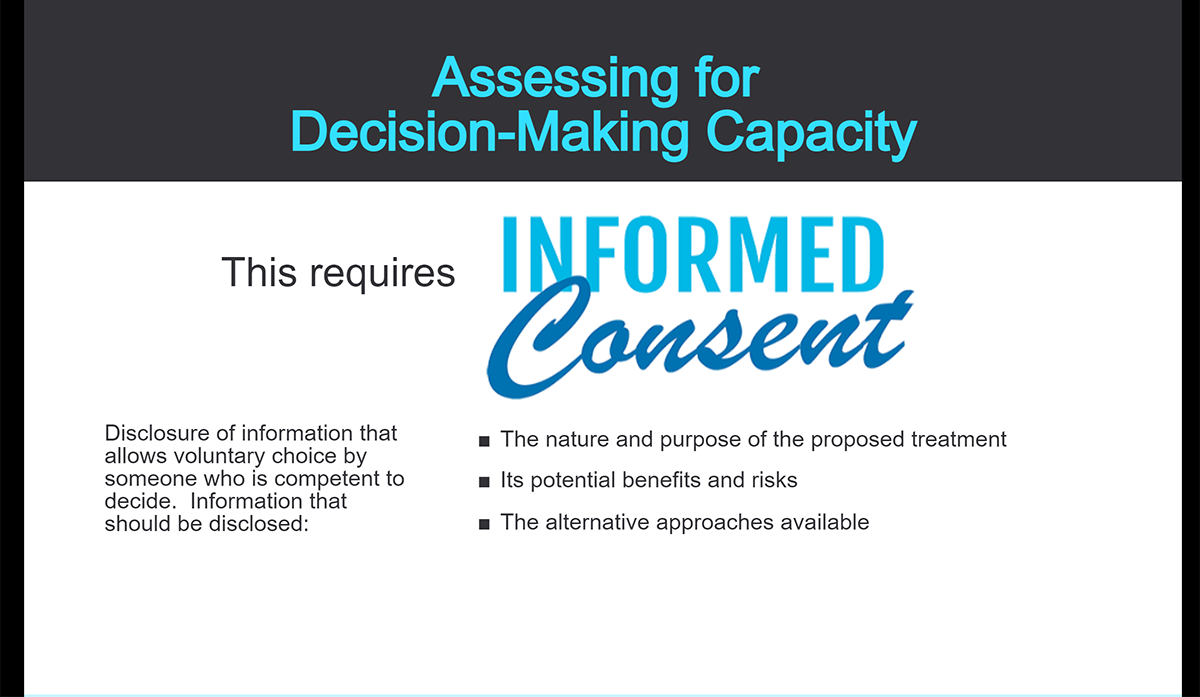
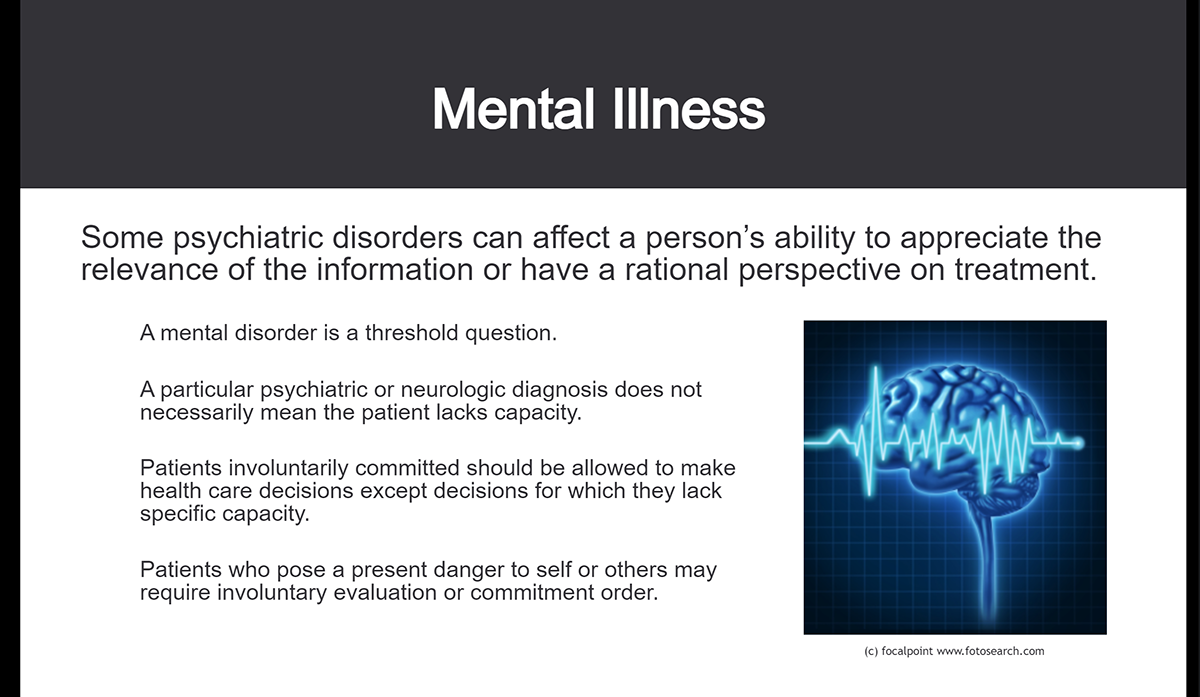
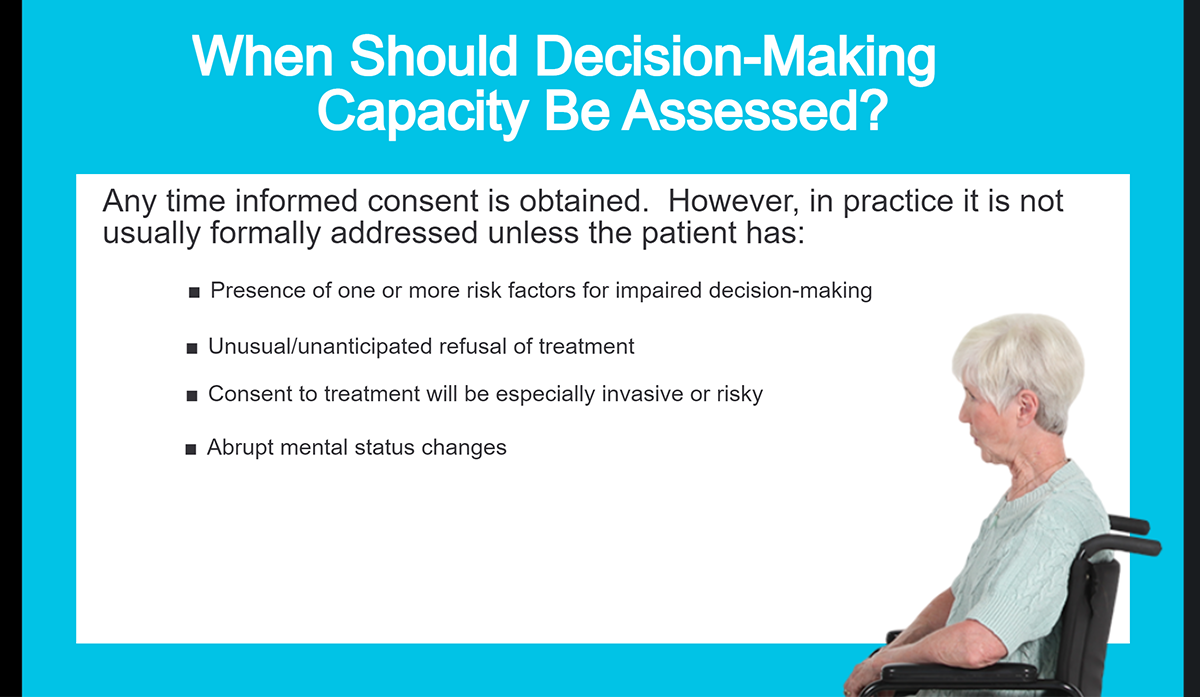
This training covers the complex issue of decision-making capacity when it comes to making medical decisions for oneself. Many are under the mistaken impression that only a psychiatrist can make the determination as to a patient’s decision-making capacity for medical decisions. People often confuse competency and decision-making capacity. The goal of this course was to help residents, fellows, physicians, and other healthcare professionals better understand what constitutes decision-making capacity and who can best determine decision-making capacity when it comes to medical care.
For this course we included:
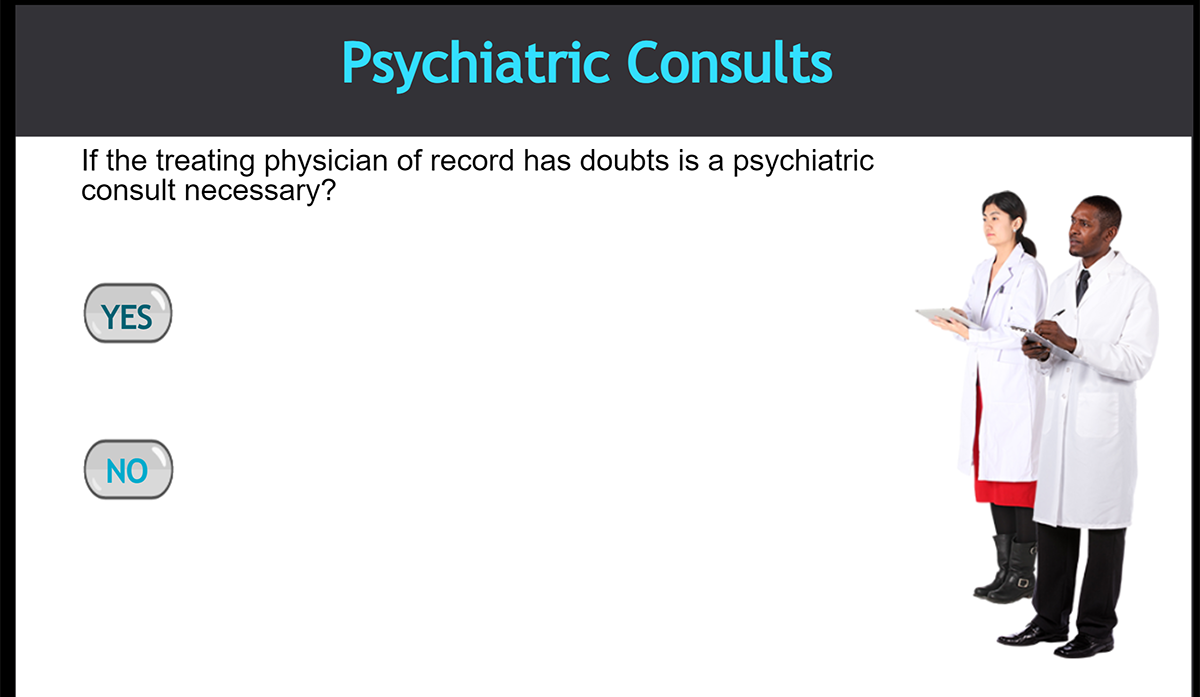
practical questions to help the learners apply the content covered in the course rather than just test for knowledge.
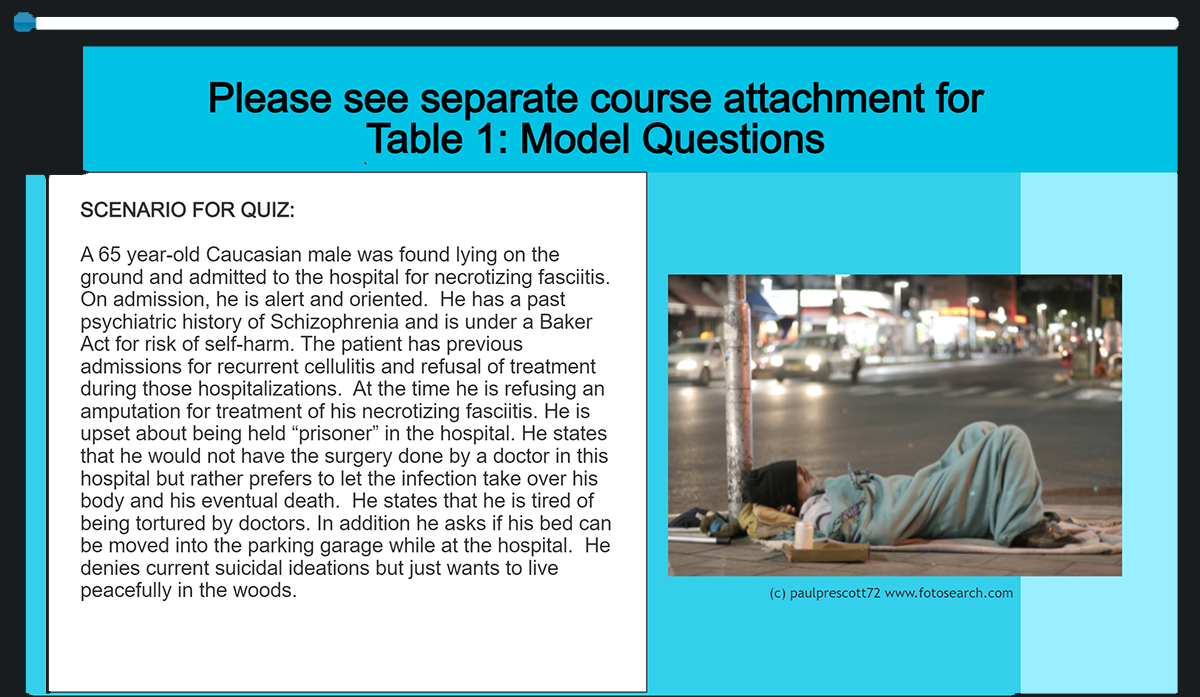
a real-life scenario for the end of the course.
a survey to get feedback on the course and the devices used to take the course. We expected residents and fellows would most likely to take the course on a mobile device. Surprisingly, most of them completed it on a desktop (all that work developing responsive design . . . )
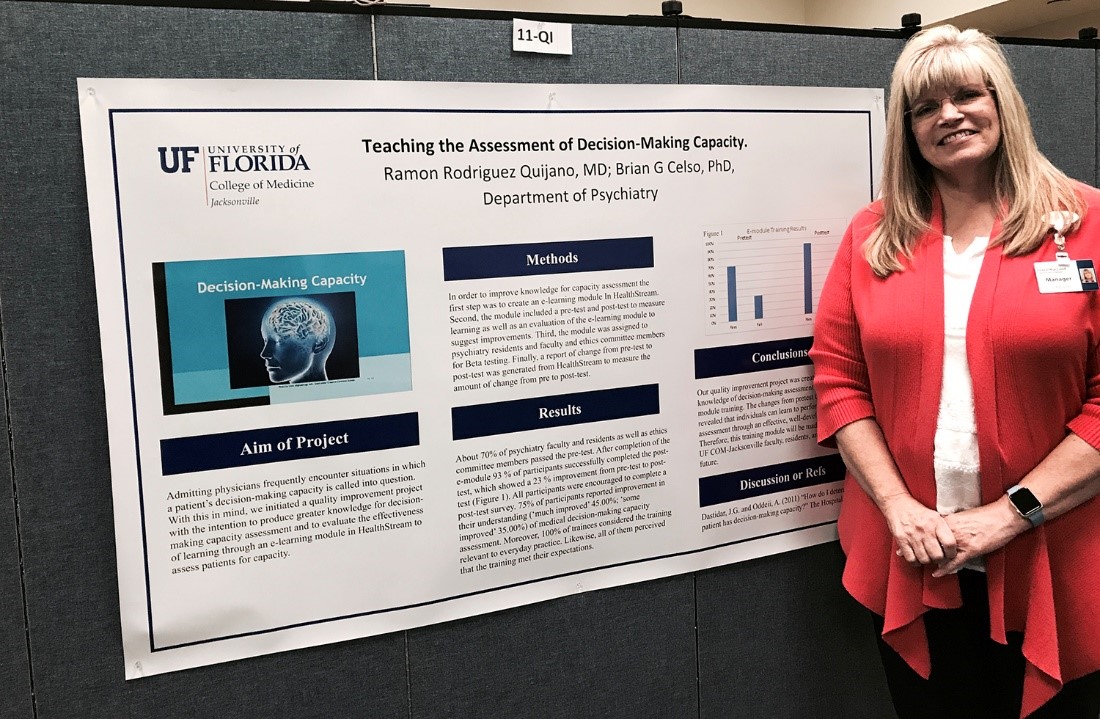
Dr. Celso and his Chief Resident were so pleased with the course that they used this course as their department research project for the annual UF College of Medicine Research Day in 2017. (last photo)
To improve this course today:
Cut down on the amount of text on the slides. (Not so easy with complex medical content and SMEs who want to see the text.)
Better graphics.
Add closed captions to the slides. Closed captions surprisingly were not a requirement.
Render new audio with WellSaid voices. (I recorded and edited all the audio using Audacity.)